May 27, 2025
Welcome back, I’m glad you’re here! This edition focuses on real authenticity, the risks of being vulnerable online, and the emotional pitfalls of becoming a brand.
ONE | Unhireable? Or Unfuckwithable? The Risks of Real Authenticity
“Just be yourself.”
The advice sounds good. Encouraging, even. Post about your truth. Speak from the heart. Show your whole self.
But what they don’t say, the part that’s conveniently left out of the carousel slides and influencer captions, is what happens when you actually do it. And the odd kind of ache that comes with being told to “just be yourself” in a world that doesn’t seem to want that self at all. When you have to accept that being your full self can cause you to lose your access to survival and acceptance.
“Be yourself!” is easy, until you post something too raw, too honest, too complicated to package neatly, and instead of applause, you get silence. Or worse, condescension disguised as advice. People will tell you to “rework the tone” or “frame it more professionally.” They’ll suggest that your honesty is “a little off-putting,” “a little too much,” “not quite on-brand.” Or the one I loathe the most, they’ll tell you to “fix your face”.
Those of us trying to navigate this space, like jobseekers, freelancers, professionals in transition, anyone living outside the neurotypical script, are left wondering: is it me, or is this whole thing a little rigged?
The Masked Performance of “Authenticity” Online
Let’s stop pretending that vulnerability online hasn’t become its own form of currency. There’s a whole influencer-industrial complex built around “authenticity,” but most of it’s still just a clever mask. A filtered and algorithm-optimized performance meant to exploit the concept of “realness”. You don’t need a media studies degree to see how fast “realness” got monetized.
There’s a formula now: be open, but not messy. Be sad, but hopeful. Share your flaws, but make sure they resolve into a tidy lesson about growth.
There’s nothing wrong with people feeling safe to cry on camera or share their breakthroughs and breakdowns, because I do it, too. There is something sacred in unfiltered truth. That is the overall point of this entire newsletter: to do it and encourage you to do it. But there’s a difference between telling the truth because it needs to be told, and telling it because you know it will perform well.
Curated vulnerability isn’t inherently fake, but it’s rarely the full story. Employers, recruiters, and even peers say they want people to be themselves, but what they really want is relatability with guardrails. They want the illusion of depth; someone who’s “real,” but still plays the game. So there’s a safety in sharing just enough to appear bold without becoming a risk.
Meanwhile, anyone who steps outside that script risks becoming invisible. Not because they’re uninteresting, but because they’ve chosen honesty over optics. Or because they’re not trying to be aspirational; they’re trying to be honest. And that’s not what gets rewarded.
Loud, Honest, and Ghosted
If you’ve ever been the person who said the thing you weren’t supposed to say (too direct, too passionate, too different) you know how quickly “not a culture fit” becomes the euphemism for “we don’t know what to do with you.” It’s a phrase that masquerades as professionalism while enforcing compliance. It feels like a threat…because it often is.
For those of us who are neurodivergent, or from any culture typically classifed as outsiders (or just plain tired of contorting into shapes that look more employable), this hits hard. Being “too much” isn’t a personality flaw, it’s often the result of surviving in systems that weren’t built for us in the first place.
Companies talk a big game about inclusion, but too often, inclusion still means conformity. Be different, but not disruptive. Be outspoken, but only when it’s convenient. Tell your truth, but not in a way that makes anyone uncomfortable. And if you do? If you show up fully and human? Don’t be surprised when the emails stop coming, the interviews get awkward, or the follow-ups never arrive. It is alarmingly easy to give up on yourself and buy into the belief that you have become “unhireable”, and I hate that for us.
So what if we reframe our dreaded fear of being “Unhireable” as something more transformative?
Because what if you’re not unhireable. What if you’re just uninterested in shrinking yourself anymore? What if the problem isn’t that you’re too bold, too honest, too complex but that the roles available are too small? Too narrow? What if you are in a system that is too afraid of what you’d illuminate if they let you shine?
There’s a kind of liberation that comes with realizing you don’t actually want to be chosen by these people in the first place, who only reward palatability. And liberation, in all forms, is often seen as a form of violence by those who resist it. But know that there is dignity in continuing to defy systems by being true to yourself.
And I know that doesn’t pay the bills, so I’m not saying burn all of your resumes, shred your shirt, and toss your dreams to the wind. I’m saying stop letting these concepts you have no control over tell you that you are unworthy. You’re not.
You’re unfuckwithable.
TWO | The Audacity of Staying Real
Staying real in a landscape obsessed with polish takes guts. It means risking being misunderstood, and then accepting that no matter how hard you try, you will be.
It also means being willing to forgo the easy approval of strangers in favor of hard-earned self-trust. Accepting that your progress may be slow because you’re less willing to manipulate your community and networks to “accelerate growth”.
But it also means finding your people, eventually. Pockets of folks, or individual people, who make you feel like you’re not invisible. Who also feel like they’re being left out of the conversation. The ones who don’t flinch when you’re too honest. The ones who can handle your volume; who say, “turn that shit up”!
Because it isn’t your job is not to be digestible. Your job is to be whole.
If you’ve been getting guff online for being whole, here’s my unsolicited take: maybe you’re not here to be popular. Maybe you’re here to build something no one else would dare.
Besides, you can always come sit at my table, where the misfits are always cool.
THREE | F*ck Polished: The Rise of the Unmarketable Visionary
At some point, “professionalism” stopped being about integrity or excellence and started meaning one thing: don’t make anyone uncomfortable. Keep your edges tucked in. Iron your personality flat. Smile like you’re not slowly dying inside. Dress like an Old Navy commercial. We’ve all learned how to do it: play the part, shrink ourselves to fit the costume, nod when we want to scream.
But what happens to the weirdos and wildcards when we’re constantly pushed out to the edges? Where do the radical thinking revolutionaries and visionaries go?
The folks who can’t, or won’t, shave themselves down to become palatable to power? The neurospicy creatives who feel allergic to small talk and allergic-er to bullshit?
Anyone who has ever been told they’re “not clear enough” or “a little hard to follow” or “just need to tighten up their narrative”?
We fall into the cracks, shrunken down to nothing, or bullied into submission out of desperation to share our gifts. We end up in coffins decades before intended, our beautiful and powerful visions buried long before our bodies gave in.
Well, I say f*ck that.
You are not a TED Talk waiting to happen. You are not a dish meant to hold everyone else’s critiques and biases. And neither am I.
So, tell me: What parts of yourself have you trimmed just to survive the interview? Or to please the algorithm? Or the nonprofit-industrial complex? Or to appease your imposter syndrome? Or the culture of “can I pick your brain?” that never seems to pick your humanity?
When will you decide enough is enough, and learn to say “fuck that”, too? Because this isn’t just about personal branding. It’s about the slow, quiet death of people who once believed they were allowed to show up whole.
Anti-Branding as Revolution
So let’s name it: branding yourself is exhausting. It’s not about visibility; it’s about safety. About protecting your income. About sounding legible to rooms that will never understand you anyway. About your reputation and social collateral not getting Tombstoned into oblivion.
And sure, if it works for you, great. No shame in getting paid! But for a lot of us, the whole thing feels like self-taxidermy: a lifeless version of yourself, preserved for professional consumption.
You are not a series of talking points in a blazer with good lighting. You are not an AI generated headshot with a palatable Zoom background.
That’s why anti-branding is resistance. Refusing to flatten yourself into a product is a threat in a culture that needs everything labeled, priced, and owned. Being your full self even if they never hire you. Even if they never understand. Even if you never go viral. You stayed true. And in this culture? That’s not a failure. That’s a revolution.
And it’s terrifying. Because when you stop performing for approval, you find out real fast who only loved the character you were forced to play.
And before the toxic positivity hustle grindset crowd comes for me, this is not about rejecting success: it’s about refusing to trade your selfhood for someone else’s respectability politics.
Maybe we all need to stop trying to make ourselves “fit the trends”, and go back to setting them. Because when you stop trying to be marketable, you make room for something wilder: to be known.
—
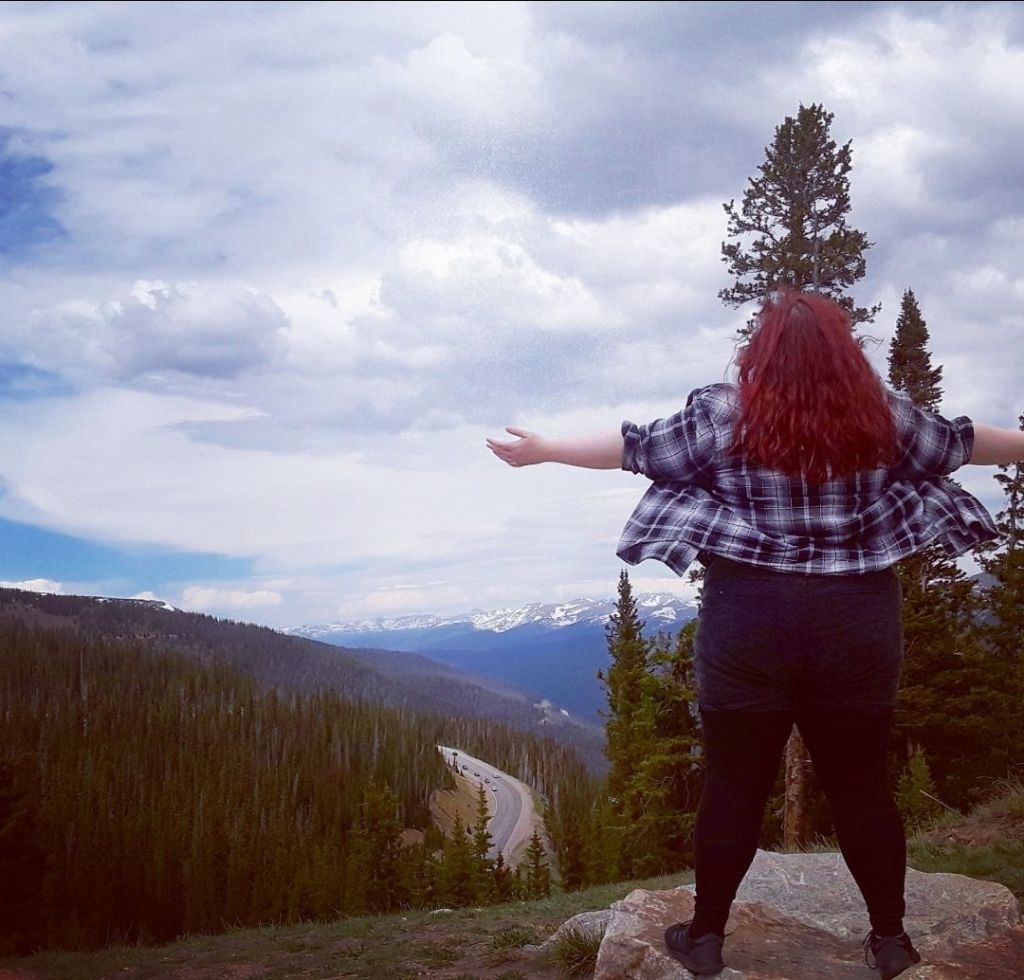
Thank you for reading this weeks edition! Please feel free to like, share, and comment below. I leave you with this authentic photo of me in my early 20s, when I thought being a writer meant becoming Hunter S. Thompson:

—
Letters from the Wreckage is published every Monday, for free, on my LinkedIn, first. Please support my work by subscribing there.
 JJ Hastings
Leave a comment